

Key Takeaways
Fair role-fit assessment starts with the work itself, not a vague impression of the person.
- Define observable, job-related criteria before selecting assessment methods.
- Match interviews, tests, work samples, and simulations to the role.
- Use consistent instructions and scoring so candidates are compared fairly.
- Treat assessment scores as one part of a decision, alongside other evidence.
- Review outcomes and candidate experience, then update the process when roles change.
What employee assessment for role fit means
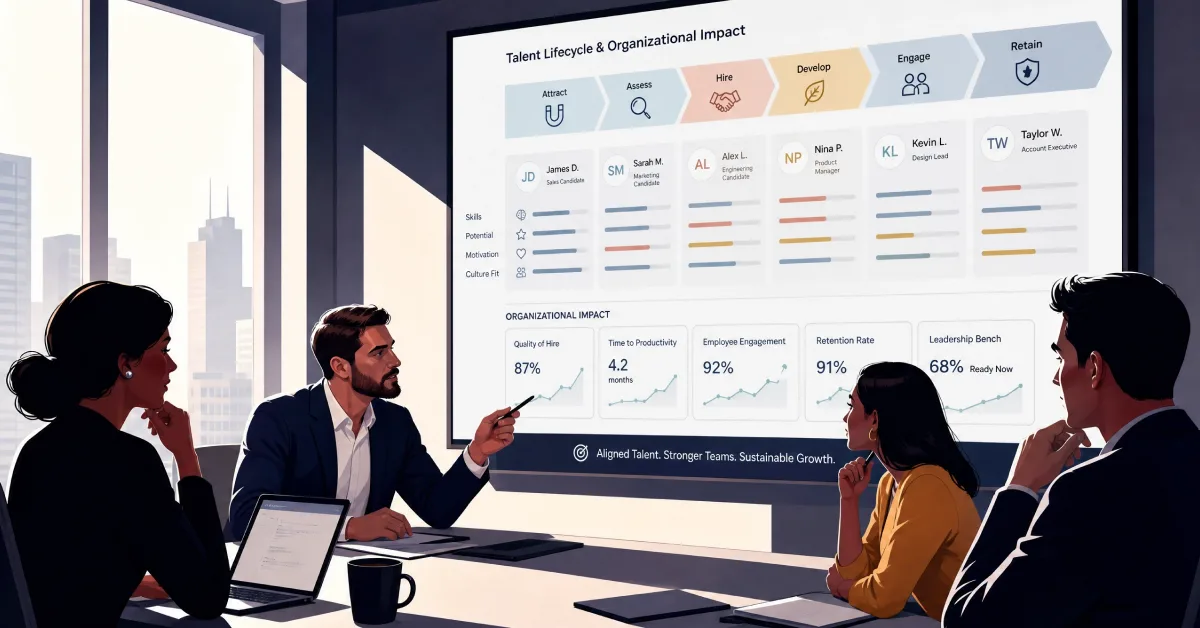
Employee assessment for role fit India means gathering relevant evidence about whether a person can meet a role’s requirements and how they are likely to approach its work. It is most useful when the criteria are tied to real tasks and applied consistently. That makes the decision easier to explain and less dependent on personal impressions.
Role fit versus culture fit
Role fit asks whether a person’s skills and work-related behaviors align with the demands of a specific job. Culture fit can drift into a judgment about whether someone feels familiar or similar to the interview panel, which may reward shared backgrounds rather than capability. Employers can instead define a few work-related values as observable behaviors, such as how a person responds to safety procedures or handles customer concerns. The distinction helps keep selection focused on what the role actually needs.
Skills, behaviors, and potential to assess
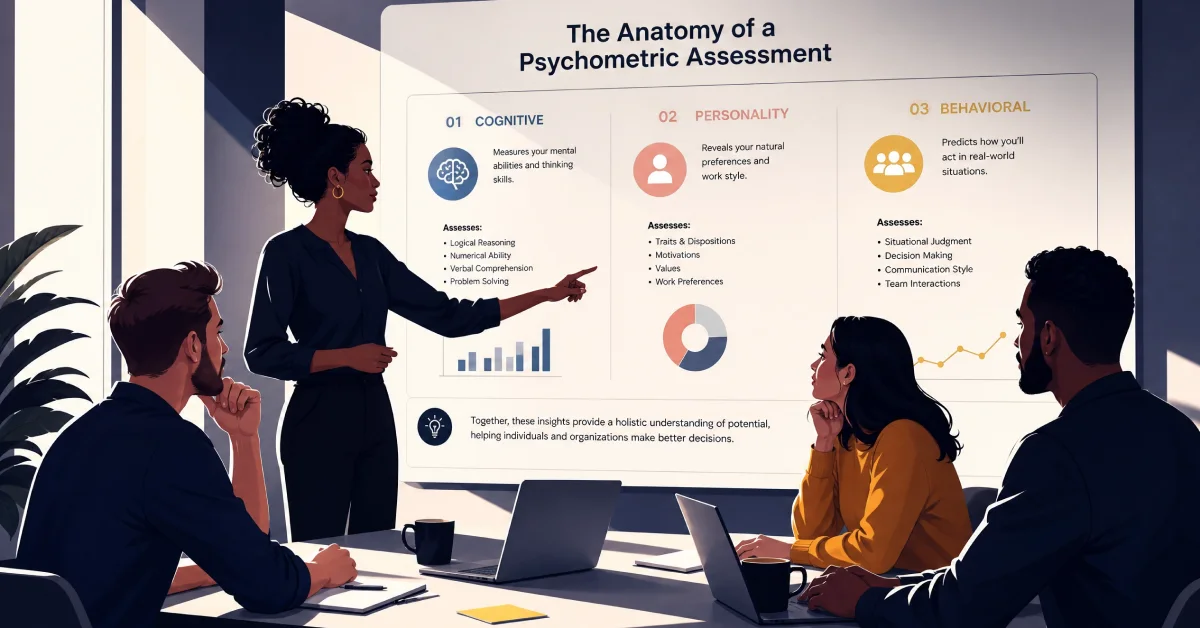
A useful assessment may examine practical skills, problem-solving, work behaviors, and the capacity to learn. Which of these matters most depends on the job: a frontline healthcare role may require careful adherence to procedures, while a technical role may call for applied knowledge and structured reasoning. Behavioral measures can add context, but they should not be treated as a complete picture of a person. For an overview of what such measures can and cannot tell you, see this guide to behavioral assessment tools.
When to assess candidates and current employees
Pre-hire assessment can help employers compare candidates on criteria that a résumé or informal conversation may not reveal. For current employees, assessments may be useful when considering development needs, a change in responsibilities, or readiness for a different role. The purpose should be clear before collecting information; a selection tool and a development conversation do not necessarily need the same measures. Tell people what the assessment is for and how its results will inform the decision.
How role requirements shape assessment choices
Start with the tasks, conditions, and expected outcomes of the job, then choose methods that can provide evidence about them. A short, relevant work sample may be more informative than a broad test for a narrowly defined task, while a structured interview can reveal how candidates reason through realistic scenarios. The relationship between a requirement and an assessment should be explainable to candidates and hiring managers alike. A simple mapping can prevent teams from choosing tools simply because they are familiar.
| Role requirement | Useful evidence | Possible method |
|---|---|---|
| Follow a defined procedure | Accuracy and sequence | Work sample or simulation |
| Explain information clearly | Clarity and listening | Structured interview or role-play |
| Solve routine work problems | Reasoning and prioritization | Job-related aptitude task |
| Work with customers | Response to common situations | Scenario-based interview |
The table is a starting point, not a universal recipe; adjust each method to the actual level and context of the role. The goal is to test the requirement, rather than to make every candidate complete the same collection of unrelated exercises.
Assessment methods for different roles
No single assessment method works equally well across all jobs. Employers hiring at volume may need methods that are practical to administer, while still giving candidates a fair chance to show relevant ability. A thoughtful mix can help reveal both what a person knows and how they apply it. The best choice depends on the role, the decision being made, and the time candidates are asked to invest.

Structured interviews and work samples
A structured interview gives candidates comparable prompts and gives interviewers a shared basis for scoring their answers. Work samples ask candidates to perform a task similar to one they would encounter on the job, scaled to a reasonable length and difficulty. Together, these methods can provide evidence that is concrete enough to discuss, rather than relying on a general sense of confidence or rapport. The questions and tasks should be reviewed to confirm that they reflect real work, not unwritten preferences.
Job-specific skills and aptitude tests
A job-specific skills test can check knowledge or practical ability that a role requires on entry. Aptitude measures may be relevant when the job involves learning new procedures or solving a defined class of problems, but a score is meaningful only in relation to those job demands. Employers should check whether the test is appropriate for the language, education, and technology access expected of the candidate pool. 9 LINKS provides validated, AI-enabled psychometric assessments that combine behavioral, cognitive, and integrity signals to help employers evaluate role fit.
Personality and behavioral assessments
Behavioral assessments can offer structured information about tendencies relevant to work, but they do not establish whether someone will succeed in every setting. Select measures that connect to role criteria, and explain their limits to the people interpreting results. For example, a preference or style measure should not become a proxy for job skill, nor should a single profile determine an offer. 9 LINKS describes assessments that combine behavioral, cognitive, and integrity signals as support for role-fit decisions, rather than a replacement for other evidence.
Simulations and realistic job previews
A simulation lets candidates respond to a situation resembling the work, such as prioritizing requests or following a process under time pressure. A realistic job preview serves a different purpose: it gives candidates a clearer view of duties, expectations, and working conditions so they can make an informed choice. Both methods work best when they represent ordinary job demands fairly, not an unusually difficult or theatrical scenario. Use a preview to inform candidates, and use a scored simulation only when its criteria are job-related.
How to build a reliable assessment process
A reliable process begins before candidates take a test. Hiring teams need agreement on the requirements, the evidence that would demonstrate them, and how that evidence will be scored. The same steps should be clear to recruiters, interviewers, and candidates. When practical, make the process simple enough to repeat without losing the connection to the job.
Define job-related criteria and success measures
Translate job descriptions into a short set of observable criteria, prioritizing those that matter most for performance. Avoid criteria such as “polished” unless the team can define the work behavior it represents and explain why it matters. For each criterion, describe what an adequate response or performance looks like. A fair assessment process can help teams connect role criteria with work samples, structured interviews, and other evidence.
Choose validated tools that match the role
A tool should measure something the role requires, and its evidence should be suitable for the intended use. Ask how it was developed, whether it has been validated for the relevant context, and whether its language and format work for the candidates being assessed. For high-volume hiring, employers may also need to understand how reports are produced and what information assessors can reasonably infer. 9 LINKS describes its assessments as role-focused and provides reports that turn behavioral, cognitive, and integrity data into hiring insights.
The principle of matching evidence to a decision also appears in very different contexts: legal text access, Maui trip planning, wood-floor restoration, sports-surface safety, and car access during probation all call for methods suited to their own questions, not hiring criteria.
Use consistent instructions and scoring rubrics
Standard instructions make it easier to compare candidates fairly. A scoring rubric should describe what different levels of evidence look like, using job-relevant examples rather than general labels such as “good” or “poor.” Before rollout, assessors can practice scoring sample responses and discuss where they disagree. That work helps the team apply the rubric consistently when real decisions carry more pressure.
Combine assessment results with other evidence
Assessment results are more useful when considered with relevant interviews, work samples, credentials, and experience. A practical checklist can keep the decision grounded:
- Identify which role requirement each piece of evidence addresses.
- Note where separate methods support or conflict with one another.
- Check whether missing evidence can be gathered fairly and consistently.
- Record the reason for the final decision in job-related terms.
This does not mean every source of information deserves equal weight. It means the decision should reflect the evidence that best relates to the requirements, and any gaps or conflicts should be considered rather than ignored.
India-specific considerations for fair assessment
Hiring in India can involve candidates with different languages, educational routes, regions, and access to devices or reliable connectivity. These differences do not indicate capability on their own, but they can affect how a person experiences an assessment. A fair process distinguishes the demands of the job from features of the testing setup that are not essential to it. Clear communication and careful review make that distinction easier to maintain.

Account for regional, linguistic, and educational diversity
Use language that candidates can understand, and avoid testing vocabulary or schooling conventions that are not needed for the job. If fluency in a particular language is essential, assess that requirement directly and consistently; do not let it become an unstated preference in unrelated parts of the process. Consider whether examples and instructions make sense across the regions from which you recruit. These steps can help reduce noise in results without lowering job standards.
Protect candidate data and explain how it will be used
Tell candidates what information an assessment collects, who may review it, and how it will factor into a hiring decision. Limit access to people who need the results for that purpose, and use appropriate safeguards when storing or sharing assessment data. A candidate should not have to guess whether a score is being used for selection, development, or another purpose. Plain-language explanations build trust and support more accountable handling of information.
Check accessibility and provide reasonable accommodations
Check whether a candidate can access the assessment using the device and assistive supports available to them. Where a disability or access need affects the test format but not the job requirement, consider a reasonable adjustment that preserves what is being measured. Document how the adjustment was handled so assessors can interpret results fairly. Accessibility is part of assessment quality, not an extra step after the process is designed.
Review local employment and privacy requirements
Employment and privacy obligations can depend on the type of data, the hiring arrangement, and the applicable rules. Employers should have qualified local advisers review their process and any vendor arrangements, especially when sensitive information or automated tools are involved. Keep records of the purpose, criteria, and decision process, and revisit them when requirements change. This guide is practical direction, not legal advice.
How to interpret assessment results
Results need context: what the method measured, how it relates to the job, and what other evidence is available. A score can look precise without answering the most important question, which is whether the candidate can meet the role’s requirements. Hiring teams should interpret results against pre-defined criteria and note uncertainty when evidence is incomplete. This is particularly important when one result could strongly affect a person’s opportunity.
Compare evidence against role requirements
Return to the criteria agreed at the start and consider how each candidate’s evidence maps to them. A strong result on a method that is only loosely connected to the job should not outweigh direct evidence on a core task. Likewise, a weaker score may need review if access, language, or testing conditions could have affected performance. 9 LINKS positions its hiring assessments as support for evaluating role fit, with reports intended to inform decisions from assessment data.
Avoid overreliance on a single score or test
One score can miss important information about skills, experience, judgment, and the conditions under which someone performed. Use complementary methods where they add relevant evidence, not simply to accumulate more data. If a candidate’s results conflict, look for a reasonable explanation and decide whether further evidence is warranted. A balanced decision is not necessarily a complicated one; it is one that reflects the strongest job-related evidence available.
Recognize bias and limitations in assessment tools
Every method has limits. Interviewers can favor familiar communication styles, work samples can reward prior access to similar tasks, and tests can reflect language or technology demands that were not intended. Review outcomes for patterns that may indicate barriers, and ask whether the assessment measures the skill it claims to measure in the hiring context. A tool should be evaluated over time rather than assumed fair because it is standardized.
Make and document consistent selection decisions
Document the criteria, the evidence considered, and the rationale for the decision in concise, job-related language. This creates a record that can be reviewed if a hiring manager’s judgment differs from the assessment evidence or from the agreed rubric. Keep documentation factual and limit it to information relevant to the selection decision. A consistent record also helps teams learn from hiring outcomes later.
How to implement and improve assessments
An assessment process should be treated as something to test and refine, not as a permanent template. Begin with a manageable set of roles, look closely at how candidates and assessors experience the process, and make changes when evidence supports them. Teams need a way to distinguish a useful signal from a convenient but untested assumption. Regular review helps keep the process aligned with changing work.
Pilot the process with representative roles
Try the process on a small group of roles that reflect different tasks, hiring volumes, and candidate contexts. Check whether candidates understand the instructions, whether the methods take a reasonable amount of time, and whether assessors can apply the scoring criteria. A pilot can reveal friction that is hard to see on paper. Use what you learn to revise materials before expanding the process.
Train interviewers and hiring managers
Training should cover the purpose of each method, how to use the scoring rubric, and how to avoid substituting personal impressions for evidence. Interviewers can practice with sample responses and discuss how to handle uncertainty or disagreement. Keep guidance close to the point of use, so that consistent practice is easier during busy hiring periods. Clear roles also prevent duplicate questions and unnecessary candidate effort.
Track job performance and assessment outcomes
Review how assessment results relate to relevant outcomes after hiring, while accounting for the limits of small samples and changing work conditions. Examine candidate completion and withdrawal patterns as well as job performance, so that a method is not judged only by its convenience to the employer. Protect privacy and use appropriate access controls when analyzing records. The aim is to learn whether the process provides useful evidence, not to claim that an assessment guarantees success.
Update criteria as roles and business needs change
Job requirements can shift as technology, team structures, and customer needs change. Revisit criteria when responsibilities change materially, and check whether each assessment still measures something necessary for the role. Remove steps that no longer contribute meaningful evidence. In this way, hiring standards stay clear without becoming rigid or detached from the work.
Conclusion
Fair employee assessment for role fit is a practical discipline: define what the job requires, gather relevant evidence consistently, and interpret results with care. When employers make the reasoning transparent and review outcomes over time, assessment can support clearer hiring decisions while respecting the differences among candidates and roles.
Frequently Asked Questions
What does employee assessment for role fit mean?
It is the process of gathering job-related evidence to understand whether a person can meet a role’s requirements. Methods may include structured interviews, work samples, tests, or simulations.
Which assessment method is best for hiring?
There is no single best method for every job. Choose methods that measure the role’s actual requirements and can be administered and interpreted fairly.
Should employers use personality tests in hiring?
They may be useful when the measure is relevant to the role and its limits are understood. Personality or behavioral results should not replace evidence about skills and job tasks.
How can employers reduce bias in assessments?
Define job-related criteria in advance, use consistent instructions and scoring, check accessibility, and review whether results show patterns that may reflect barriers rather than job capability.
Should an assessment score determine who gets hired?
A score should rarely stand alone. Consider it alongside other relevant evidence, such as interview responses, work samples, and experience.
When should candidates take an assessment?
The timing depends on the method and the hiring process. Explain the purpose before candidates begin, and avoid asking them to complete lengthy assessments before there is a clear reason to do so.
How often should employers review their assessment process?
Review it when roles or business needs change and periodically examine candidate experience and hiring outcomes. Keep methods that provide relevant evidence and revise those that do not.
We Appreciate The Feedback From Our Clients.
It is always a joy to hear how our work has positively impacted them and how our assessments have helped in finding the right people.
We have used 9 LINKS psychometric tool in our Campus Placement Programme.The tool has helped us to identify right candidate as per our organisation requirements…

We have just started using it. It differentiates various personalities and helps in decision making. The clarity on its precision level will be gathered over a period of time…

Counselling test curated for NES has been very useful in identifying the skill sets and allotting appropriate job fitment to students as per their quotients. Multilingual tests developed by considering various key…

It is indeed great pleasure in my part to share complementing note to you & your team. Needless to say 9 LINKS is one of the best organisation to conduct skill gap analysis through assessment of Cognitive skills..

It is crucial that validating the quality of the candidates in recruitment. 9 LINKS is a service that we can confidently say does that. 9 LINKS online assessment precisely giving us the right candidates to pick and proceed on recruitment…

Read Our Blog For The Latest On Research & Insights.
Get Insights into latest developments in HR industry and psychometric assessments.

Take a Free Assessment


