

Key Takeaways
Hiring affects retention well before an employee joins. A clearer, evidence-led process helps employers reduce employee attrition hiring by improving role fit, expectations, selection quality, and early support.
- Study why people leave, not only how many leave.
- Write job descriptions that reflect the real work.
- Use structured evidence alongside human judgment.
- Make the candidate experience honest and predictable.
- Connect hiring data with onboarding and retention results.
Understand how hiring contributes to employee attrition
Employee attrition is rarely caused by one decision. It can reflect a mismatch between the role presented, the work experienced, the support available, and the person’s expectations. Hiring teams can reduce employee attrition hiring more effectively when they treat early exits as evidence about the whole employee journey. Start with a clear distinction between departures that hiring could have influenced and those that were outside the process.
Distinguish preventable attrition from unavoidable turnover
Some departures are unavoidable: retirement, relocation, health circumstances, restructuring, or a planned change in workforce requirements may have little to do with hiring quality. Others are more preventable, including early exits caused by unclear duties, unsuitable schedules, poor manager fit, or a gap between the job description and daily reality. A useful starting point is the difference between attrition and turnover, because the terms describe related but not identical workforce outcomes.
Rather than aiming for zero departures, classify them by likely cause, timing, and whether the role was replaced. This keeps the discussion practical. A new hire who leaves after two weeks may reveal a communication or expectation problem, while a long-serving employee who retires tells you something different about workforce planning.
Identify patterns across roles, teams, and tenure
A single attrition rate can hide important differences. Compare early-tenure exits with later departures, and examine whether patterns cluster around one location, shift, manager, role, or hiring source. In frontline environments, the details may include transport, shift predictability, workload, supervisor behaviour, or the availability of training.
Use cohorts so that a hiring change can be compared with a meaningful group of employees. For example, review employees hired in the same quarter and track whether they remain at 30, 90, and 180 days. The aim is not to label one group as good or bad, but to find repeatable signals worth investigating.
Analyze exit interview and employee survey data
Exit interviews can explain a departure, but they are only one source of evidence. Combine them with onboarding check-ins, pulse surveys, manager observations, attendance patterns, and performance discussions. Look for repeated language rather than treating one comment as a definitive diagnosis.
A simple coding system can group feedback into themes such as expectations, pay, manager support, progression, workload, culture, and personal circumstances. Review those themes by role and tenure. The employee retention perspective is also useful here because it draws attention to development, confidence, and the reasons people choose to stay, not only the reasons they leave.
Connect hiring decisions to retention outcomes
Recruiting data becomes more useful when it remains connected to what happens after the offer. Record the criteria used to select a person, the expectations discussed, and the support promised during onboarding. Later, compare those inputs with performance, engagement, and retention indicators.
This does not mean claiming that one assessment or interview caused someone to stay. It means creating a feedback loop. If employees who receive a realistic preview remain longer, or if one hiring channel produces frequent early exits, the process has a specific question to answer. The employee attrition guide offers a broader framing for linking workforce measurement with practical retention work.
Define roles that attract the right candidates
Retention begins with a role that people can understand before they apply. A polished advertisement is not enough if it hides the hours, pressure, physical demands, reporting structure, or learning curve. Candidates make better decisions when the employer describes the work plainly. This improves the quality of the applicant pool and reduces avoidable disappointment after joining.

Create accurate job descriptions
Write the job description from observed work, not an old template. Explain the main tasks, shift pattern, work location, reporting line, required travel, tools, and expected pace. Where the role serves customers or patients, describe the nature of those interactions without softening the difficult parts.
Use language that a candidate can understand quickly. Separate what the employee will do every day from occasional responsibilities and future opportunities. A precise description may attract fewer casual applicants, but it gives serious candidates a better basis for deciding whether the role suits them.
Set clear performance expectations
Candidates should know what satisfactory performance looks like during the first few months. Describe the behaviours and results that matter, such as meeting service standards, following safety procedures, completing records accurately, or responding reliably to a shift schedule.
Avoid promising rapid promotion or exceptional flexibility unless those conditions are genuinely available. Clear expectations help managers coach consistently after joining, and they give new employees a fair way to understand progress. This continuity between recruitment language and day-to-day management is often more valuable than a highly attractive but vague employer message.
Separate essential skills from trainable skills
Requiring every desirable skill at the application stage can shrink the pool unnecessarily. Identify the capabilities that are genuinely essential on day one, then distinguish them from skills that can be developed through training, practice, or supervision. This is particularly useful for high-volume roles where learning capacity and work behaviours may matter as much as prior experience.
The skills-based hiring guide provides a useful way to think beyond degree or pedigree requirements. For each requirement, ask whether it is necessary for safe and effective performance, measurable during selection, and realistic for the target candidate market. That discipline makes the role more accessible without lowering the standard.
Explain team culture and working conditions honestly
Culture should be described through observable working conditions rather than slogans. Explain how managers give feedback, how teams coordinate during busy periods, how schedules are published, and what support is available when work becomes difficult. Candidates need enough detail to judge whether the environment fits their needs and expectations.
Honesty here is not a recruitment disadvantage. It helps people self-select and gives interviewers a more grounded conversation. When the eventual experience matches the early description, trust starts before the first day.
Build a selection process for long-term fit
A retention-minded selection process does not try to predict every future event. It gathers consistent, job-related evidence and uses it carefully. Interviews, work samples, assessments, and references each reveal different parts of a candidate’s potential. The process should make those signals comparable while leaving room for responsible human judgment.
Use structured interviews and consistent scorecards
Ask every candidate a planned set of questions tied to the role’s requirements. Interviewers can still probe for detail, but the core questions and scoring anchors should remain consistent. A scorecard might define what weak, acceptable, and strong evidence looks like for customer handling, reliability, problem-solving, or teamwork.
This reduces the influence of first impressions and memorable but irrelevant details. It also makes hiring discussions easier to review. A decision should be explainable in terms of evidence gathered for the role, rather than a general feeling that someone would fit in.
Assess role-specific skills with realistic exercises
A realistic exercise lets candidates demonstrate how they would approach work that resembles the job. It might involve prioritising tasks, responding to a customer scenario, interpreting information, or completing a practical technical step. Keep instructions clear, allow reasonable accessibility adjustments, and avoid exercises that test stamina or familiarity with an employer’s internal jargon instead of job capability.
For employers hiring at scale, pre-employment assessments can add structured evidence when they are relevant to the role and designed for the candidate context. Their results should complement interviews and work samples, not replace accountability or a thoughtful decision.
Evaluate motivation, collaboration, and adaptability
Long-term fit includes more than technical competence. Ask candidates about the conditions in which they do their best work, how they respond to changing priorities, and how they handle feedback. Behavioural questions should invite specific examples rather than abstract claims such as “I am a team player.”
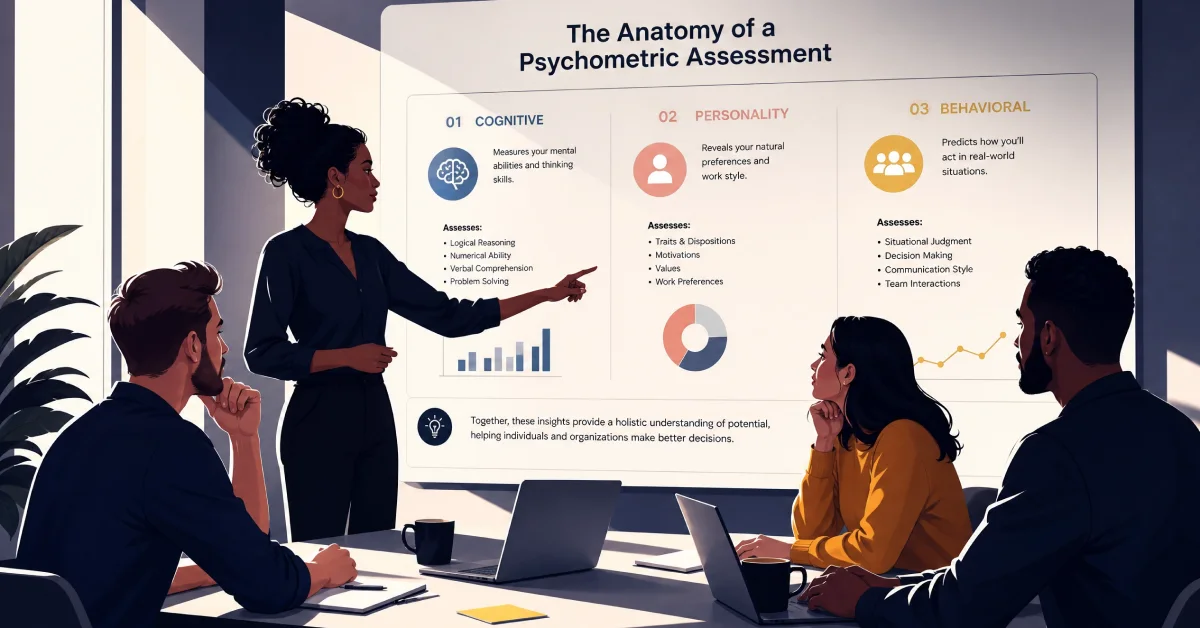
Validated psychometric assessments can provide additional evidence about behavioural and cognitive traits when they are matched to the role. 9 LINKS applies AI-enabled psychometric assessments to help employers evaluate role fit and make clearer hiring decisions for India’s frontline workforce. The relevant question is not whether a candidate resembles an ideal personality, but whether the available evidence relates to the demands of the job.
Reduce bias without lowering hiring standards
Consistency is a practical way to reduce bias. Use the same core questions, define scoring criteria in advance, and separate evidence from assumptions about background, accent, education, or confidence. Review whether each selection method measures something that the job actually requires.
Fairness does not mean accepting weak evidence. It means applying the same job-related standard and making room for candidates to demonstrate capability in more than one way. A structured process can therefore be both more inclusive and more demanding in the right areas.
Improve the candidate experience before making an offer
The candidate experience is part of the employment promise. Delays, silence, contradictory information, or dismissive interviews can signal how an organisation operates after joining. A respectful process does not guarantee acceptance or retention, but it helps candidates make an informed choice and protects trust when the answer is no.

Communicate timelines and next steps clearly
Tell candidates what stages remain, who they will meet, how long each stage may take, and when they should expect an update. If circumstances change, send a short explanation rather than leaving people to guess. This is especially important for frontline candidates who may be arranging transport, time away from work, or access to a phone and internet connection.
Clear communication also improves internal discipline. When recruiters and managers agree on the process before interviews begin, candidates receive fewer conflicting messages. A simple timeline can make a demanding selection process feel much more professional.
Give candidates realistic job previews
A realistic preview should cover the parts of the work that are most likely to influence satisfaction: schedule, location, workload, customer contact, physical conditions, targets, and support. Present both the meaningful parts of the role and its demands. Candidates who decide not to continue are saving both sides a poor-fit hire.
Use the same facts in the job description, interview, and offer discussion. If the role includes rotating shifts or a steep learning period, describe how those realities are managed. Alignment before joining is one of the most direct ways to reduce early attrition.
Prepare interviewers to represent the employer well
Interviewers shape the candidate’s view of the organisation even when they are not making the final decision. Brief them on the role, evaluation criteria, expected conduct, and the questions they should avoid. They should be ready to describe the work accurately and answer reasonable questions without making promises they cannot keep.
A short calibration session can surface inconsistencies before they reach candidates. It can also remind managers that a selection conversation is a two-way evaluation. Candidates are assessing the quality of leadership, clarity of work, and respect they can expect.
Use feedback to strengthen the hiring process
Ask candidates where the process was clear, where it became difficult, and whether the role was represented accurately. Keep the questions brief and protect confidentiality. Review responses alongside outcomes such as offer acceptance, withdrawal, and early-tenure turnover.
Do not treat every negative comment as proof that the entire process is broken. Look for recurring friction by stage, recruiter, location, or role. Small improvements, such as clearer instructions or fewer duplicate conversations, can make selection more accessible without making it less rigorous.
Connect hiring with effective onboarding
The handoff from recruiting to onboarding is where many good intentions become vague. New employees should not have to repeat everything they discussed with the hiring team, nor should managers receive only a name and start date. A useful handoff preserves relevant expectations while respecting privacy and avoiding unsupported labels.
Share candidate insights with the onboarding team
Give the manager and onboarding team the information they need to support a strong start: agreed responsibilities, availability, relevant experience, development needs, and any commitments made during selection. Share it in a concise, job-related format and confirm that sensitive information is handled appropriately.
The purpose is continuity, not surveillance. If a candidate was told that a particular training pathway or shift arrangement would be available, the responsible manager should know. This reduces the risk that the first weeks contradict the recruitment conversation.
Set 30-, 60-, and 90-day goals
Early goals should be specific enough to guide action and modest enough to be achievable while the employee learns. The first month may focus on orientation, safety, systems, and core routines. Later milestones can add independent performance, customer handling, quality, or team contribution.
Discuss the goals rather than simply sending them by email. Ask what support is needed and schedule reviews before a concern becomes a surprise. A new employee is more likely to seek help when feedback is treated as part of the plan rather than as a response to failure.
Assign managers and peers clear onboarding responsibilities
Onboarding works better when responsibilities are distributed. The manager can set priorities and provide feedback, a peer can explain informal routines, and the training owner can confirm technical readiness. Name the people involved and specify what each person will do.
This is especially valuable where employees work across shifts or sites. Without clear ownership, a new hire may receive several introductions but no dependable source of help. Consistent support is a practical extension of good selection.
Check engagement before early warning signs become attrition
Schedule brief conversations during the first weeks and months. Ask what matches expectations, what remains unclear, whether the workload is manageable, and whether the employee has the tools and support promised. Listen for practical barriers rather than relying only on a generic satisfaction score.
The goal is early correction, not pressure to stay. A manager who can address a scheduling issue, clarify a target, or provide coaching may prevent a resignation. If the problem is structural, the pattern should return to the hiring and workforce teams for review.
Measure and improve hiring-related retention
Measurement turns retention from a broad ambition into a set of testable questions. No single metric can establish quality of hire, and short-term retention alone can reward poor decisions that become visible later. Use several measures, define them consistently, and review them with the people who can change the process.
Track retention by source, role, manager, and cohort
Break retention data into dimensions that support action. A source may appear effective overall but perform poorly for one role. A manager may have a strong team in one location and a weaker result in another. Cohort analysis can show whether a process change affected employees hired after a particular date.
Keep definitions stable. Decide what counts as an early exit, when the retention clock starts, how internal transfers are treated, and how planned departures are separated from preventable exits. Without those rules, comparisons become arguments about data rather than conversations about improvement.
Monitor quality-of-hire and early-tenure turnover
Quality of hire can combine indicators such as time to productivity, performance against agreed expectations, manager assessment, attendance reliability, and retention at defined milestones. Select measures that are observable and relevant to the role. Avoid turning a complex judgment into one unexplained score.
Early-tenure turnover deserves its own view because it often points to expectation, selection, onboarding, or working-condition issues. 9 LINKS provides AI-enabled psychometric assessments that combine behavioural, cognitive, and integrity signals to help evaluate role fit; employers still need to connect any selection evidence with post-hire outcomes.
A useful scorecard might look like this when reviewed monthly or quarterly:
| Measure | Useful question | Review point |
|---|---|---|
| 30-day retention | Did the hiring promise match the first weeks? | Onboarding and expectations |
| 90-day retention | Did the employee reach a workable level of fit and support? | Manager coaching and role design |
| Time to productivity | How quickly did the employee perform agreed core tasks? | Training and selection evidence |
| Early exit reason | What pattern appears across departing new hires? | Job preview and process changes |
The table is not a substitute for judgment. It gives leaders a shared starting point for asking why outcomes differ and which part of the hiring-to-onboarding journey should change.
Compare hiring speed with retention outcomes
Speed matters when vacancies affect service, safety, or team workload, but a faster process is not automatically a better process. Compare time to fill with offer acceptance, early performance, and retention by role. A small reduction in hiring time may be unhelpful if it produces more rework and frequent replacement hiring.
Look for the point where additional process time creates meaningful evidence. In some roles, a structured work sample may be worth the extra step; in others, clearer screening questions may solve the problem more simply. The right balance depends on job risk, hiring volume, and the cost of an early mismatch.
Use data to refine recruiting and selection decisions
Close the loop by changing one or two elements at a time and watching what happens. You might revise a job preview, retrain interviewers, adjust a scorecard, or review whether an assessment measures a real job requirement. Document the rationale so that later results can be interpreted rather than forgotten.
9 LINKS describes a role-fit approach built around AI-enabled psychometric assessments for frontline hiring in India. Used responsibly, structured evidence can sharpen a decision; it should not remove human accountability or turn a person into a test result. The strongest hiring strategy is one that learns from retention outcomes and keeps improving the match between people, work, and support.
Conclusion
Reducing attrition through hiring is a matter of alignment: the role must be described honestly, evidence must be gathered consistently, candidates must understand the work, and onboarding must deliver what was promised. When employers connect recruiting decisions with early employee outcomes, they can replace guesswork with practical improvements that strengthen both hiring quality and retention.
Frequently Asked Questions
What is the difference between employee attrition and turnover?
Attrition generally describes employees leaving without the position being replaced, while turnover can include departures where the employer intends to fill the vacancy. Organisations should define both terms clearly before comparing results.
Can better hiring eliminate employee attrition?
No. Some departures are unavoidable or strategically planned. Better hiring can reduce preventable mismatches, but retention also depends on management, working conditions, development, compensation, and personal circumstances.
Which hiring problems most often lead to early attrition?
Common problems include inaccurate job descriptions, unclear schedules, unrealistic performance expectations, weak manager communication, and selection methods that do not reflect the actual work.
How early should retention be measured after hiring?
Reviewing retention at 30, 60, and 90 days can reveal early friction, while longer checkpoints show whether the match remains effective. Use several milestones rather than relying on one date.
What should a realistic job preview include?
It should explain the main duties, schedule, location, workload, working conditions, performance expectations, team structure, and available support. Candidates need both the appealing and demanding parts of the role.
How can employers reduce bias in hiring while maintaining standards?
Use job-related criteria, structured questions, consistent scoring, accessible assessments, and more than one form of evidence. Standards should remain clear, but candidates should have a fair opportunity to demonstrate capability.
What is the best way to connect hiring and onboarding?
Share relevant expectations and commitments with the onboarding team, assign clear support responsibilities, set early goals, and schedule regular check-ins. This creates continuity between what was promised and what the employee experiences.
We Appreciate The Feedback From Our Clients.
It is always a joy to hear how our work has positively impacted them and how our assessments have helped in finding the right people.
We have used 9 LINKS psychometric tool in our Campus Placement Programme.The tool has helped us to identify right candidate as per our organisation requirements…

We have just started using it. It differentiates various personalities and helps in decision making. The clarity on its precision level will be gathered over a period of time…

Counselling test curated for NES has been very useful in identifying the skill sets and allotting appropriate job fitment to students as per their quotients. Multilingual tests developed by considering various key…

It is indeed great pleasure in my part to share complementing note to you & your team. Needless to say 9 LINKS is one of the best organisation to conduct skill gap analysis through assessment of Cognitive skills..

It is crucial that validating the quality of the candidates in recruitment. 9 LINKS is a service that we can confidently say does that. 9 LINKS online assessment precisely giving us the right candidates to pick and proceed on recruitment…

Read Our Blog For The Latest On Research & Insights.
Get Insights into latest developments in HR industry and psychometric assessments.


Take a Free Assessment


