~ by Pranav Joneja | January, 2026
Hiring decisions sit at the heart of organisational success. Every appointment shapes productivity, culture, leadership strength, and long-term performance. Yet, for decades, organisations have relied heavily on resumes, interviews, and managerial instinct to decide who to hire, promote, or develop. While experience and judgement matter, they are not always reliable predictors of future success.
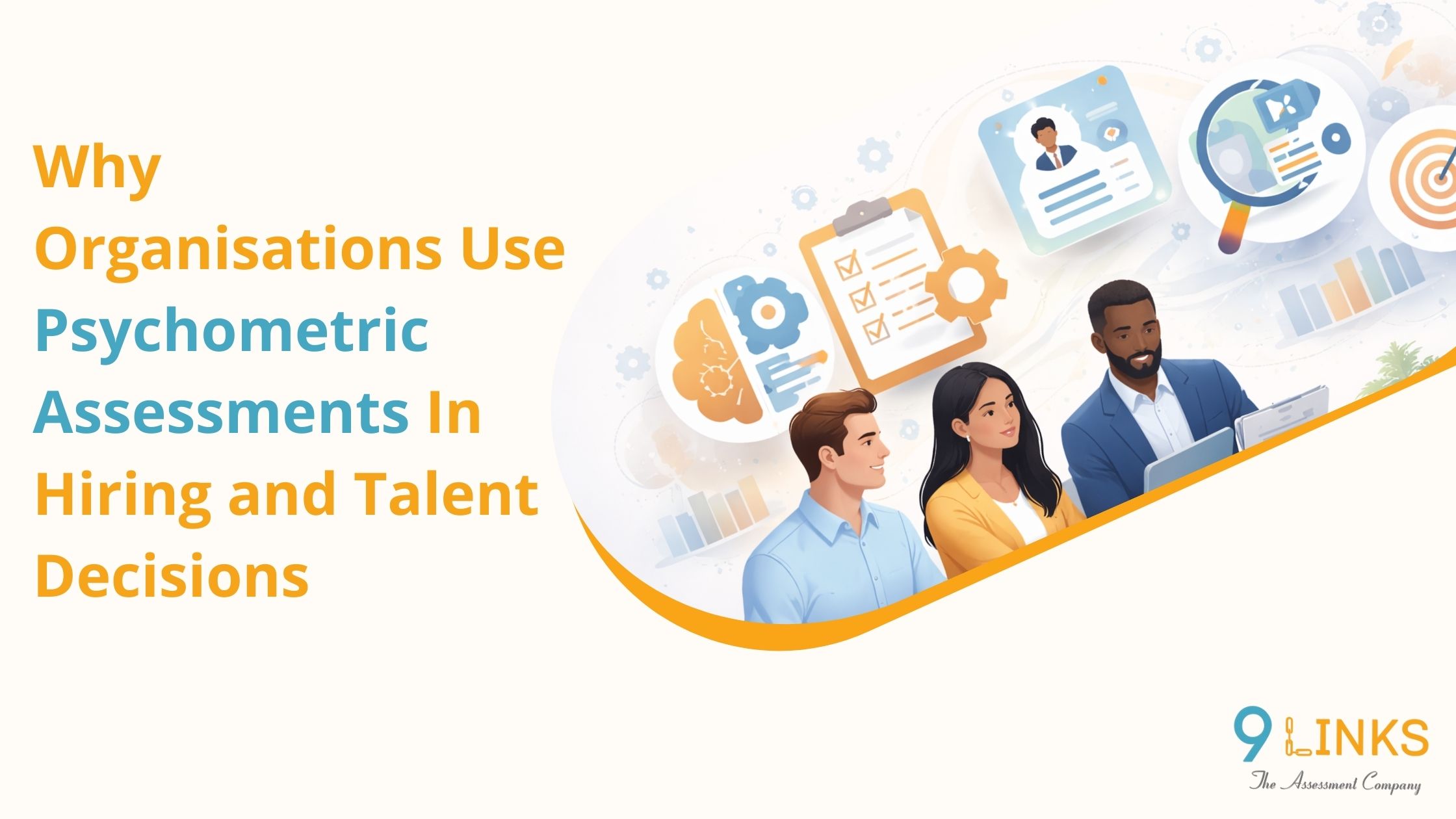
As roles evolve and workplaces become more complex, organisations need better evidence to support people decisions. This is where psychometric assessments have become increasingly important. They offer structured, objective insights into how individuals think, behave, and respond to challenges, helping organisations make informed decisions across the employee life cycle.
This blog explores why organisations use psychometric assessments, how they address common hiring challenges, and the role they play beyond recruitment in building stronger, more resilient workforces.
Despite best intentions, traditional hiring methods have several limitations.
Resumes often reflect access to opportunity rather than actual capability. Interviews tend to reward confidence and communication skills rather than job performance. Different interviewers may assess the same candidate in entirely different ways, leading to inconsistency and bias.
Unconscious bias also plays a significant role. Interviewers may favour candidates who share similar backgrounds, communication styles, or educational paths. Time pressure further reduces decision quality, particularly in high-volume hiring.
Most importantly, traditional methods struggle to predict long-term performance, adaptability, and retention. A candidate who performs well in an interview may not thrive in the role, while a quieter candidate may develop into a strong performer given the right environment.
These challenges create risk. A poor hiring decision affects productivity, team morale, customer experience, and operational costs. Organisations therefore, need tools that go beyond surface-level evaluation.
Psychometric assessments introduce structure and objectivity into people decisions. Rather than relying on impressions, they measure psychological attributes using standardised and validated tools.
They help organisations:
Importantly, psychometric assessments do not replace human judgement. They enhance it by providing reliable insights that decision-makers can interpret in context.
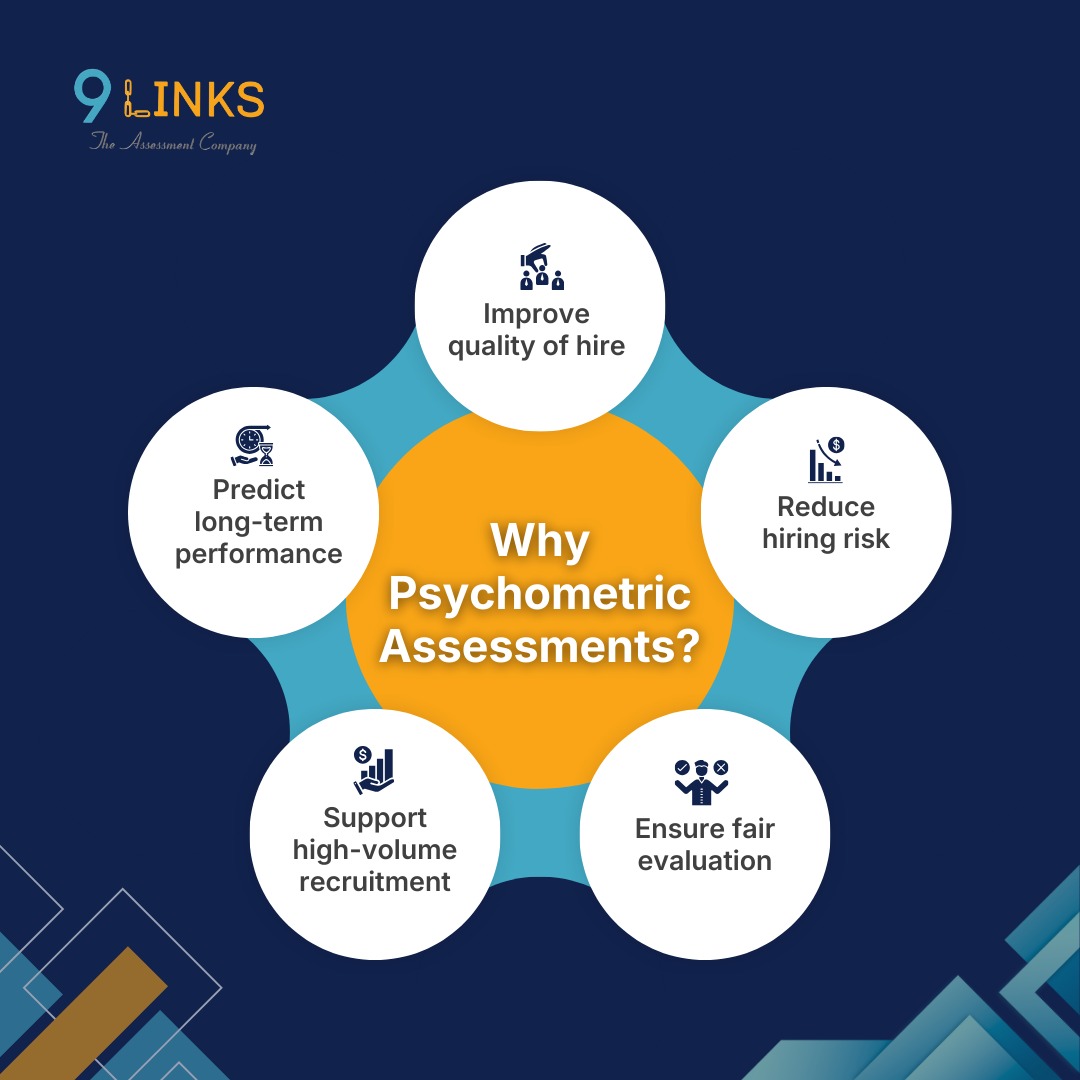
Improving Quality of Hire
Psychometric assessments help organisations evaluate whether a candidate’s cognitive ability, behaviour, and work style align with the demands of the role. This allows hiring teams to look beyond qualifications and focus on suitability and potential.
Reducing Hiring RiskBy identifying misalignment early, assessments reduce the likelihood of poor hiring decisions. Candidates who may struggle with problem-solving, adaptability, or behavioural expectations can be identified before joining.
Supporting Fair and Consistent EvaluationEvery candidate is assessed against the same benchmarks. This improves fairness, transparency, and consistency, especially when multiple interviewers or locations are involved.
Managing High-Volume RecruitmentIn campus hiring and operational roles, psychometric assessments enable efficient shortlisting without compromising quality. They help organisations process large applicant volumes systematically.
Psychometric assessments are not limited to recruitment. Their value extends across the employee life cycle.
Identifying High-Potential TalentPerformance in a current role does not always indicate readiness for future responsibilities. Assessments help identify individuals with learning agility, decision-making capability, and adaptability, all of which are critical for growth.
Leadership Identification and DevelopmentLeadership success depends on judgement, emotional awareness, responsibility, and strategic thinking. Psychometric tools help organisations identify leadership potential early and support first-time managers.
Learning and Development PlanningAssessment results highlight strengths and development needs, enabling organisations to design targeted learning programmes rather than generic training.
Succession PlanningRather than relying on tenure or informal recommendations, organisations can use assessment data to build evidence-based succession pipelines.
When used responsibly, psychometric assessments create a holistic view of individuals. Cognitive ability explains how people think and learn. Behavioural insights reveal work style and interpersonal tendencies. Integrity measures highlight reliability and ethics.
Together, these insights help HR teams and business leaders make balanced decisions. Assessments provide evidence, while human judgement applies context, role understanding, and organisational priorities.
This approach shifts people decisions from opinion-based to insight-led.
Assessments support decisions; they do not make them independently. Final accountability should always rest with people.
“One Test Fits All Roles”Effective use requires mapping assessments to role-specific competencies. Different roles demand different cognitive and behavioural strengths.
“Assessments Are Only for Hiring”Psychometric assessments are equally valuable for development, leadership planning, and team effectiveness.
To maximise value, organisations should:
Used thoughtfully, assessments strengthen trust rather than create resistance.
Organisations that integrate psychometric assessments into their people strategy benefit in several ways:
Over time, this creates a more stable, engaged, and capable organisation.
Modern HR functions are increasingly data-driven. Psychometric assessments align naturally with this shift by providing structured insights that complement interviews, performance reviews, and engagement data.
They support merit-based decisions, enhance diversity efforts, and enable organisations to plan talent development more strategically.
People decisions have long-term consequences. Psychometric assessments help organisations move from assumption to evidence, from intuition to insight.
By measuring how individuals think, behave, and adapt, organisations can reduce hiring risk, identify potential, and develop talent more effectively. When combined with human judgement, psychometric assessments enable better, fairer, and more sustainable decisions across the employee life cycle.
Organisations use psychometric assessments to evaluate cognitive ability, behaviour, and work style objectively. This helps improve hiring accuracy, reduce bias, and identify candidates who are more likely to perform well and stay longer in the role.
2. Are psychometric assessments only useful during recruitment?No. Psychometric assessments are also used for leadership identification, employee development, succession planning, and team building. The insights they provide remain valuable throughout the employee life cycle.
3. Do psychometric assessments replace interviews and managerial judgement?No. Psychometric assessments complement interviews by providing structured data. Human judgement remains essential for interpreting results, understanding context, and making final decisions.
4. How do psychometric assessments help reduce hiring risk?They highlight mismatches between a candidate’s abilities, behaviour, and role requirements early in the process. This reduces the chances of poor job fit, early attrition, and performance issues after hiring.
It is always a joy to hear how our work has positively impacted them and how our assessments have helped in finding the right people.


“ It is crucial that validating the quality of the candidates in recruitment. 9 Links is a service that we can confidently say does that. 9 Links online assessment precisely giving us the right candidates to pick and proceed on recruitment...

We have used 9 links psychometric tool in our Campus Placement Programme.The tool has helped us to identify right candidate as per our organization requirements...

" We have just started using it. It differentiates various personalities and helps in decision making. The clarity on its precision level will be gathered over a period of time...

" Counselling test curated for NES has been very useful in identifying the skill sets and allotting appropriate job fitment to students as per their quotients. Multilingual tests developed by considering various key...

“It is indeed great pleasure in my part to share complementing note to you & your team. Needless to say 9 Links is one of the best organization to conduct skill gap analysis through assessment of Cognitive skills..
Get Insights into latest developments in HR industry and psychometric assessments.